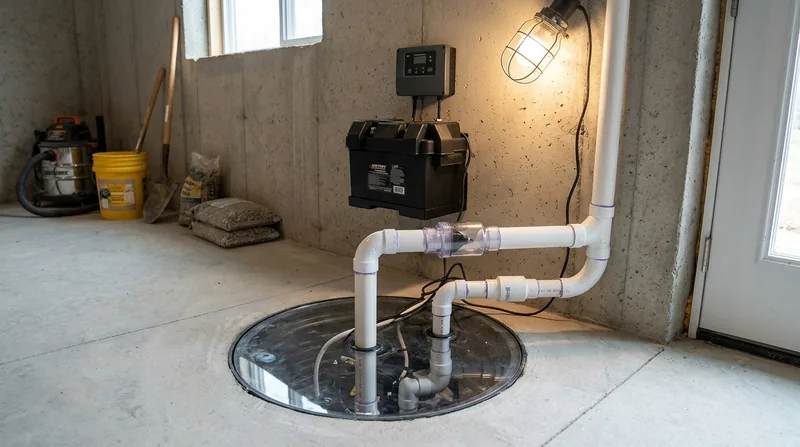




Battery Backup Sump Pumps in Columbia: Power-Out Insurance for a Wet Basement
Columbia sits on deep silt loam over clay-rich subsoil that swells when wet and cracks when dry, and the flat lots near Hinkson Creek and Flat Branch hold stormwater long after the rain stops. When a spring thunderstorm rolls through and knocks out power, your primary sump pump stops with it, and the water table keeps rising into the sump basin. Battery Backup Sump Pumps in Columbia keep the pit dry when the grid fails, sized to your basin and wired to an alarm you can hear upstairs. We install and service these systems on the fieldstone and early block basements of Benton-Stephens and Old Southwest as well as the poured walls of the newer south-side subdivisions. If your primary pump is aging out, pair the backup with a full sump pump installation and replacement so both systems discharge through the same check valve and line.
Why Backup Pumping Matters in Columbia's Storm Season
From late March through early July, Columbia gets heavy thunderstorms that drop an inch or more in an hour, and the runoff sheets down the hills toward downtown and pools on the creek bottoms. Power outages in those same storms are common, and that is exactly when a wet basement turns into a flooded one. Older homes in Douglass Park and the Stephens Lake area often have undersized pits and a single pump with no redundancy at all.
- Storms that knock out power are the same storms that push the water table into your sump basin.
- Clay-rich subsoil near Hinkson Creek holds water and releases it slowly, so the pump runs long after the rain ends.
- A failed primary pump during a summer trip means a wet basement and soaked stored belongings by the time you return.
- Battery systems with an alarm tell you the pump cycled while you were away, instead of letting you find out later.
A backup pump does not fix a wet basement on its own, but it buys the hours that keep a bad night from becoming a cleanup.
Key info: In the 1950s brick ranches around North Central, we routinely find a single pump in a shallow pit with no backup and no check valve. One power blip during a June storm and the basin overflows within minutes.
For official guidance on sump discharge and drainage connections, check the City of Columbia building regulations before any work begins: https://www.como.gov/.
How We Size and Install a Backup System in Columbia
We start by measuring the pit and checking the primary pump's discharge rate, then match a backup pump and battery that can carry the load through a typical outage in your part of town. The battery is the part most homeowners underestimate, so we size it to run the pump for hours, not minutes.
- We inspect the sump basin, check valve, and discharge line to confirm the primary system is sound.
- We measure pit depth and inflow so the backup pump matches your actual water volume.
- We mount the backup pump beside the primary on a shared discharge with its own check valve.
- We install a deep-cycle battery and a charger that keeps it topped off between storms.
- We wire a high-water alarm and test the whole system under load before we leave.
If the pit itself is undersized or the drain tile is silted in, we tell you plainly, because a backup pump cannot outrun a failing drain tile system.
Key info: A walkout basement in the Nifong Park subdivisions often has a pit that fills fast during flash runoff. We sized one system there with a 12-volt backup and a second battery so it could run through a six-hour outage without help.
Backup Pump Options We Install
Not every basement needs the same setup, and the right choice depends on your pit, your primary pump, and how often you lose power. Here is how the common approaches compare.
| Approach | Description | Best for |
|---|---|---|
| 12-volt battery backup | Deep-cycle battery and charger run a secondary pump when power drops. | Most Columbia homes with a single primary pump. |
| 24-volt dual-battery system | Two batteries and a larger backup pump for longer outages. | Walkout lots and pits that fill fast. |
| Backup with high-water alarm | Audible alarm sounds when water rises past the float. | Homes where the pit is out of sight. |
| Primary plus backup combo | New primary pump and backup installed together on a shared discharge. | Aging pumps in 1900s to 1970s basements. |
We walk you through the trade-offs in your own pit before you commit to a system.
Battery Backup Sump Pumps Cost in Columbia: What to Expect
Most homeowners in Columbia pay from $900 for a basic 12-volt backup installed on an existing pit with a sound primary pump. The figure climbs when the pit needs rebuilding, when you add a second battery for longer outages, or when the discharge line and check valve need replacement at the same time. A walkout basement on the south side with fast inflow sits at the higher end, while a simple add-on in an older Benton-Stephens basement often lands near the starting point.
We give you a written number after we see the pit, not over the phone, because the battery and pump size depend on how much water your basin actually takes in. Getting two or three estimates is smart, and you should ask each contractor whether the price includes the battery, the charger, the alarm, and the test run. See the full pricing overview for how the numbers break down.
Choosing a Backup Sump Pump Contractor Near Me in Columbia
Anyone can sell you a battery and a pump, so the questions you ask matter more than the brochure. A dedicated basement waterproofing contractor will inspect the pit, test the primary pump, and tell you when a backup alone is not the answer. General foundation firms and plumbers may install a pump, but the diagnosis of why your basin fills so fast belongs with someone who works below grade every day.
- Confirm the contractor is licensed and insured and ask for a certificate before work starts.
- Get two or three written estimates that list the battery, charger, alarm, and labor separately.
- Ask for local references from basements similar to yours, especially older fieldstone or block walls.
- Ask whether the discharge connection needs a permit from the local building department, since rules vary by jurisdiction.
- Check that the contractor will test the system under load and show you the alarm before leaving.
If the pit or drain tile is the real problem, we say so and point you to the right repair instead of selling a backup you do not need. Reach out through our contact page to schedule a look at your sump basin.
Battery Backup Sump Pumps in Columbia: Pricing Guide
| Service | Price | Details |
|---|---|---|
| Basic 12-volt backup installation | Starting at $900 | Includes backup pump, deep-cycle battery, charger, and test run on an existing sound pit. |
| Backup with high-water alarm | Starting at $1,150 | Adds an audible alarm wired to the float so you hear a rise before it floods. |
| Dual-battery 24-volt system | Starting at $1,600 | Two batteries and a larger backup pump for fast-filling pits and longer outages. |
| Primary plus backup combo | On estimate | New primary pump and backup on a shared discharge; price depends on pit condition and line length. |
| Travel | Included | in Columbia and surrounding areas, no separate call-out or mileage fee |
| Estimate | Free | Response within 24h at (573) 818-2013, no obligation to book |
Indicative pricing, the exact cost depends on square footage, finish, and site access. Free personalized estimate within 24h at (573) 818-2013.


