



Basement Wall Sealing in Columbia: Stop the Damp Before It Spreads
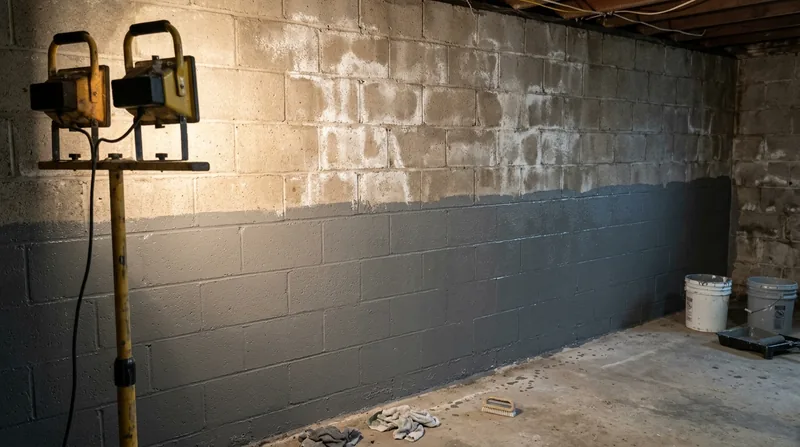
If you own a home in Benton-Stephens, Old Southwest, or one of the 1950s brick ranches off Stephens Lake, you already know the pattern. The first heavy thunderstorm of May pushes water through the block, and by June the wall wears that white chalky bloom called efflorescence. Basement Wall Sealing in Columbia starts with an honest read of what is actually happening to your wall, not a bucket of sealer slapped on a wet surface. Our crews work below grade every week in this town, from fieldstone foundations near the Hinkson Creek corridor to poured walkout walls in the Nifong Park subdivisions. We prep the surface, remove the mineral bloom, and apply the right penetrating or membrane product for your wall type. If the real problem is hydrostatic pressure, we tell you that too, and point you to the fix that actually works. Start with a free basement inspection so we can look at the wall before anyone quotes a sealer.
Why Wall Sealing Matters in Columbia's Silt Loam and Clay Subsoil
Columbia sits on deep silt loam over clay-rich subsoil. That clay swells when wet and cracks when dry, and every freeze-thaw swing in January works the foundation a little harder. Flat lots near Flat Branch and the Hinkson creek bottoms hold storm water for days after a spring squall, and that standing water pushes against the wall as hydrostatic pressure. Older fieldstone and early block walls in Old Hawthorne wick that moisture straight through the mortar. A sealer helps only when the wall is damp from vapor, not when water is actively pushing in.
- We check for active seepage after rain before recommending any coating.
- We remove efflorescence and loose parging so the sealer bonds to sound masonry.
- We identify whether the moisture is rising damp, condensation, or true hydrostatic pressure.
- We recommend a penetrating sealer for porous block and a membrane for poured walls with hairline cracks.
If we find pressure, we say so plainly and explain why a coating alone will fail.
Key info: A 1920s brick house on a fieldstone foundation in Old Southwest often needs repointing and a breathable sealer, not a plastic membrane. A 2005 poured wall in the Nifong Park area usually takes a crystalline sealer and crack injection. Same city, two different answers.
For official guidance on foundation and drainage permits, check the City of Columbia building department before any work that alters drainage.
How We Seal a Basement Wall in Columbia, Step by Step
We do not sell a sealer as a cure-all. The first hour on site is diagnostic. We look at the wall from the inside, check the exterior grade and downspout extensions, and read the efflorescence pattern to see where water is entering. Then we choose the method that matches the wall, not the other way around.
- We inspect the wall for cracks, honeycombing, and prior patch jobs.
- We wire-brush and scrape off efflorescence, loose parging, and old paint.
- We fill active cracks with epoxy or polyurethane injection before any coating goes on.
- We apply the sealer in two coats, keeping the wall damp but not wet between passes.
- We check the exterior grade and extend downspouts so roof water moves away from the footing.
- We leave you a written note on what we found and what to watch after the next storm.
If the wall is bowing or the pressure is structural, we stop and talk about interior drain tile or wall anchors instead of a sealer.
Key info: On a 1968 split-level in Douglass Park, we found the wall damp from a clogged footing drain, not a failed sealer. We cleaned the drain, sealed the block, and the wall stayed dry through the next June storm. A coating alone would have peeled within a season.
Sealing Methods We Use on Columbia Basement Walls
Not every wall takes the same product. Fieldstone, early block, and modern poured concrete behave differently under our clay soil, so we match the method to the wall and the moisture source.
| Approach | Description | Best for |
|---|---|---|
| Penetrating sealer | Sinks into the masonry and reacts with free lime to block capillary flow. | Damp block walls with no active seepage. |
| Membrane coating | Flexible rubberized layer that bridges hairline cracks in poured walls. | Poured walls in the newer south and east subdivisions. |
| Crystalline waterproofing | Crystals grow into the concrete pores and seal them from the inside. | Damp poured walls with minor weeping. |
| Epoxy or polyurethane injection | Ports drilled along the crack, resin pushed in to close it full depth. | Active cracks before any surface sealer. |
| Breathable masonry sealer | Lets vapor escape while shedding liquid water from the face. | Old fieldstone and brick walls in Old Southwest. |
We pick the method after we see the wall, not before.
Basement Wall Sealing Cost in Columbia: What to Expect
Most residential wall sealing jobs in Columbia start around $1,500, and that figure covers a typical single-wall or small basement with prep, efflorescence removal, and two coats of sealer. The number climbs with square footage, wall condition, and whether we find active cracks that need injection first. A fieldstone wall in Old Hawthorne takes more prep than a poured wall in a 2015 subdivision, and that labor shows up in the quote. Getting two or three estimates is smart, because the cheapest bid often skips the prep that makes the sealer last.
For a fuller breakdown by wall type and square footage, see our pricing overview. We do not quote from a photo alone on older walls.
Basement Wall Sealing Near Me: Hiring a Contractor Near Columbia
When you search for basement wall sealing near me in Columbia, you get a mix of dedicated waterproofing crews and general handymen. Ask each one the same questions before you sign anything, and do not let a low bid skip the diagnostic step. The wall tells you what it needs, and a contractor who reads it correctly will save you from paying twice.
- Confirm the company is licensed and insured, and ask for a certificate before work starts.
- Get two or three written estimates that list prep, materials, and crack treatment separately.
- Ask for references from Columbia jobs on the same wall type as yours.
- Check whether the work needs a permit from the local building department, especially if drainage changes.
- Ask how they handle HOA rules if you live in a subdivision with exterior appearance standards.
If a bid sounds too good, it usually skips the efflorescence removal and the crack injection.
Reach out through our contact page to schedule a look at your wall.
Basement Wall Sealing in Columbia: Pricing Guide
| Service | Price | Details |
|---|---|---|
| Single wall sealing | Starting at $1,500 | Includes prep, efflorescence removal, and two coats on one typical basement wall. |
| Full basement wall sealing | Starting at $2,800 | Covers all interior walls, with crack injection priced separately if active seepage is found. |
| Fieldstone or early block wall | On estimate | Extra prep and repointing needed on 1900s foundations before any sealer can bond. |
| Crack injection add-on | Starting at $450 | Epoxy or polyurethane injection for active cracks before surface sealing begins. |
| Travel | Included | In Columbia and surrounding areas, no separate call-out or mileage fee. |
| Estimate | Free | Response within 24h at (573) 818-2013, no obligation to book. |
Indicative pricing, the exact cost depends on square footage, finish, and site access. Free personalized estimate within 24h at (573) 818-2013.


