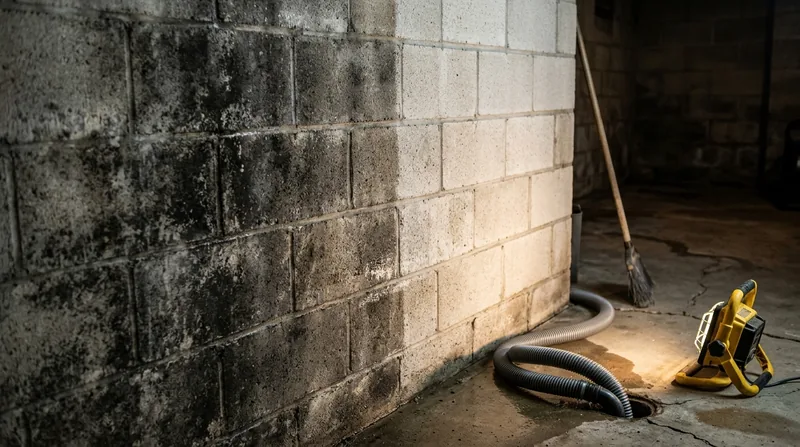




Basement Mold Remediation in Columbia: Fix the Moisture, Not Just the Mold
If you are searching for Basement Mold Remediation in Columbia, you already know the musty smell is not going away on its own. Columbia sits on deep silt loam over clay-rich subsoil that swells with every spring storm and cracks in dry summers. That movement opens paths for water, and water in a basement is what feeds mold. The older brick and fieldstone basements in Benton-Stephens and Old Southwest are especially vulnerable, but poured-wall basements in the newer south-side subdivisions are not immune. We find the moisture source first, then remove the mold and put a stop to its return. For the underlying water problem, see our basement waterproofing service.
Why Basement Mold Grows So Fast in Columbia Homes
Columbia's climate and soil create a near-perfect mold incubator below grade. Humid summers keep basement air heavy, and the clay-rich subsoil traps water against foundation walls long after the rain stops. Hydrostatic pressure pushes that moisture through block joints, fieldstone mortar, and hairline cracks. Add the freeze-thaw swings of a Missouri winter and you get repeated cycles of wet walls and slow drying. The result is mold growth on joists, rim boards, drywall, and stored belongings.
- Fieldstone and early block walls in Old Southwest and Benton-Stephens wick groundwater and stay damp for weeks.
- Daylight and partial basements in North Central and the Stephens Lake area collect seepage at the wall-floor joint.
- Poured-wall basements in Nifong Park and the south and east edges show mold after sump pump failures or clogged drain tile.
- Flat lots near Hinkson and Flat Branch creeks hold stormwater against foundations after heavy thunderstorms.
Every one of those paths leads to the same place: a basement that stays wet long enough for mold to colonize.
Key info: A homeowner in Old Hawthorne found white efflorescence and black mold on the lower block courses after a June storm. The cause was a failed footing drain, not a surface stain. Treating the mold without fixing the drain would have brought it back within one season.
For official guidance on moisture and mold in buildings, the EPA mold resources are a good starting point for Columbia homeowners.
How We Remove Basement Mold in Columbia and Keep It From Coming Back
Mold remediation without moisture control is a temporary fix. Our process starts with finding out why the basement is wet, then removes the mold safely, then addresses the water path. We work in contained zones, use HEPA filtration, and treat affected framing and masonry. If the source is hydrostatic pressure or a failed drain, we recommend the right drainage correction rather than a coat of paint over the problem.
- We inspect the basement, rim area, and wall-floor joint, and take moisture readings to map the wet zones.
- We set up containment and negative air pressure so spores do not spread to the rest of the house during removal.
- We remove mold-damaged drywall, insulation, and porous materials and bag them for disposal.
- We HEPA-vacuum and treat affected framing, joists, and masonry with an antimicrobial application.
- We identify the moisture source, whether that is a wall crack, failing drain tile, or a sump pump that quit during a storm.
- We correct the source with the appropriate repair and verify dryness before we close out the job.
The final step is the one that matters most: confirming the basement stays dry through the next rain cycle.
Key info: A split-level ranch near Stephens Lake had mold on the lower wall of a daylight basement. The sump basin was dry because the discharge line had frozen and split. We replaced the line, added a battery backup sump pump, and remediated the wall. No mold returned the following spring.
Remediation and Moisture-Control Approaches We Use
Not every mold job needs the same scope. A small patch on a rim board from a single leak is a different project from mold across a fieldstone wall fed by hydrostatic pressure. The table below shows the main approaches and when each one fits a Columbia basement.
| Approach | Description | Best for |
|---|---|---|
| Containment and HEPA removal | Sealed work zone with negative air pressure, HEPA vacuuming, and bagged disposal of porous materials. | Visible mold on drywall, insulation, or stored items after a leak or sump failure. |
| Antimicrobial treatment of framing and masonry | Surface treatment of joists, rim boards, block, and fieldstone after removal of affected materials. | Mold on structural wood and masonry that stays in place. |
| Crack injection and wall sealing | Epoxy or polyurethane injection at active cracks, plus sealing of porous wall surfaces. | Seepage through poured-wall cracks that keeps one section damp. |
| Interior drain tile and sump correction | Interior perimeter drain routed to a sump basin with a working pump and check valve. | Hydrostatic pressure and wall-floor seepage that no surface treatment will stop. |
| Vapor barrier and dehumidification | Vapor barrier over the floor and controlled dehumidification to keep basement air dry. | Humid basements with musty odor but no active standing water. |
Basement Mold Remediation Cost in Columbia: What to Expect
Most basement mold remediation projects in Columbia start around From $1,500 for a contained area with a straightforward moisture source. That figure covers containment, removal of affected materials, treatment, and a basic moisture correction. The price moves up with the square footage affected, the number of rooms involved, and whether the moisture fix requires drain tile, crack injection, or a sump replacement. Fieldstone walls in older homes often take more labor than poured walls because the surface is irregular and the mortar joints hold moisture.
Access matters too. A basement with a narrow stair and low headroom slows the work. So does a finished basement where we have to protect flooring and framing during containment. Getting two or three estimates is smart because the scope of "mold remediation" varies widely between contractors. Ask each one whether the moisture source is included or billed separately. Our full pricing overview breaks down the ranges by scope.
Basement Mold Remediation Near Me: How to Choose a Contractor Near Columbia
Hiring for mold work near Columbia means asking the same questions you would ask any trade. Licensing and insurance come first, then a clear scope in writing, then references from local jobs. Mold remediation touches containment, demolition, and sometimes drainage, so the contractor needs to understand below-grade water, not just surface cleaning. Ask whether the company is a dedicated waterproofing specialist or a general handyman adding mold to a list.
- Confirm the contractor is licensed and insured, and ask for a certificate before work starts.
- Get at least two or three written estimates with the moisture source spelled out.
- Ask for references from Columbia neighborhoods with basements like yours.
- Check whether permits are needed for any drainage or structural work, and verify with the local building department.
- Make sure the scope says whether the moisture fix is included or separate.
A contractor who cannot explain why the basement was wet is not the right one for the job. You can request a free estimate and we will walk the basement with you.
Key info: Rules on permits for drainage changes and structural repair vary by jurisdiction in the Columbia area. Always confirm requirements with the local building department before work begins. We can tell you what typically triggers a permit, but the department has the final word.
Basement Mold Remediation in Columbia: Pricing Guide
| Service | Price | Details |
|---|---|---|
| Contained mold treatment with moisture source correction | Starting at $1,500 | Covers containment, HEPA removal of affected materials, antimicrobial treatment, and a basic moisture fix. |
| Larger area or multiple rooms | Starting at $2,800 | Priced by square footage affected; finished basements with protected flooring and framing move the number up. |
| Mold plus drainage correction | On estimate | When hydrostatic pressure or failed drain tile is the source, the drainage scope needs an on-site look first. |
| Travel | Included | in Columbia and surrounding areas, no separate call-out or mileage fee |
| Estimate | Free | Response within 24h at (573) 818-2013, no obligation to book |
Indicative pricing, the exact cost depends on square footage, finish, and site access. Free personalized estimate within 24h at (573) 818-2013.


